

Ian Traynar Coaching Announces Identity-Level Leadership Workshops for Organisations Facing AI and Structural Change
News originally published by
GlobeNewswireExecutive Coach Ian Traynar of Southampton, United Kingdom, brings the Traynar Method™ to leadership team development, with keynotes and workshops that help senior teams change how they lead as AI and flatter structures reshape their work.
Southampton, United Kingdom, Nov. 19, 2026 (GLOBE NEWSWIRE) -- Ian Traynar Coaching today announced identity-level leadership workshops and keynotes for senior teams whose organisations are moving to flatter structures or reorganising work around AI. The sessions are offered as a 90-minute keynote or an immersive half-day or full-day workshop, in person or online, for leadership teams, organisations and faith communities in the UK and internationally.
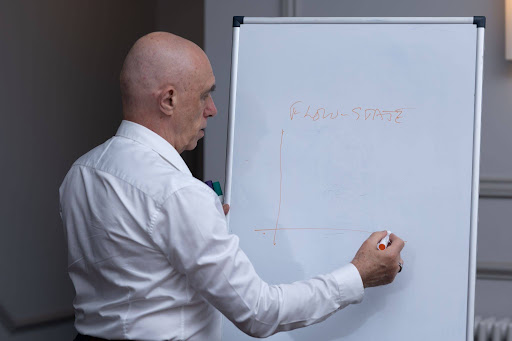
Ian Traynar, Founder and Executive Coach behind the Traynar Method™ leading a workshop for leaders, Southampton, United Kingdom.
According to the IBM Institute for Business Value's May 2026 study of 2,000 chief executives and senior leaders across 33 countries, 79 percent are decentralising decision-making as AI takes on a larger role. The 2026 Work Trend Index from Microsoft and LinkedIn, a survey of 20,000 people who use AI at work across ten countries including the UK, found that only 26 percent say their leadership is clearly and consistently aligned on AI. And in Deloitte's State of AI in the Enterprise report, published in October 2026, nearly a quarter of 3,500 senior leaders across 25 countries said it is unclear who is accountable when AI produces a negative outcome.
The workshops are designed for leadership teams in organisations that are thinking about restructuring, whether that means moving from top-down hierarchy toward a flatter or self-managed structure, or a hybrid of the two, or reshaping teams as AI changes the work itself. Both changes can remove something many leaders have quietly relied on: the evidence that told them who they were. A leader whose sense of competence rested on holding the final decision, or on being the person with the answer, can find the new structure working against them. Patterns such as taking work back from a capable team, second-guessing decisions and finding it hard to delegate tend to return under exactly this kind of pressure.
In flatter structures, the difficulty often shows up in everyday decisions. Many self-managed organisations ask the person closest to an issue to seek advice from colleagues and then decide, rather than wait for everyone to agree. Peer feedback becomes more frequent and harder to set aside. When someone hears feedback on their role as a verdict on themselves, or keeps consulting long after they have enough advice because a shared decision feels safer, meetings lengthen and decisions stall. The structure is sound. What slows it down is what the decision means to the person making it.
The transition can be especially sensitive for founders. Many feel they must either let go of their role entirely or hold on to all of it. In a flatter structure, the question of who holds final responsibility does not disappear; it has to be answered again. Finding a different kind of authority, one that keeps hold of the vision without keeping control, is as much a question of identity as of structure.
"Moving from a hierarchical structure to a flatter one is hugely difficult, and most of the difficulty is not in the organisation chart," said Ian Traynar, Founder and Executive Coach of Ian Traynar Coaching. "A self-managed structure tells people that feedback on their role is not a judgement on them. Only the person can make that true. If a leader's sense of who they are was built for the old structure, it will keep producing the old behaviour in the new one."
The same pressure is arriving through AI. "Leaders are being told AI can transform how their people work," said Traynar. "The forward-lookers find that exciting, but many people are quietly insecure about where they will fit, and directors are being careful about how they present it to their teams. Most people offer far more than their organisation has realised, and far more than AI could replace by taking over their work. Bringing in AI doesn’t have to begin with deciding who goes. The work is to find what each person really brings, and value it."
Most leadership development focuses on skills, strategies and behaviours. The workshops start one level down. Leaders learn to notice when they are drawing conclusions from a narrow slice of evidence, to widen the lens to include everything they know about their own capabilities, and to reorganise limiting self-concepts at the level where those patterns are formed, rather than through willpower or positive thinking.
Each workshop is shaped around the organisation in the room, with the content agreed with the leadership team beforehand, so that it can grow into a bespoke programme if the organisation wants one. The work usually starts where the change is pressing hardest: the senior manager who is unsure what their role is for once AI drafts the report they used to write, or the founder who keeps quietly taking decisions back from a team that is ready for them. Leaders look at what that situation has come to mean to them, and at the evidence the meaning rests on. Some of what surfaces is structural, and a clearer agreement or role will settle it. Some of it lives in how a person hears feedback, or in what they believe a change says about them, and that is where the workshops spend most of their time.
Bringing in AI well depends on knowing what each person actually brings. Most people have a depth of experience that never appears in a job description, and their real contribution may lie somewhere quite different from the task AI is about to take on. The same is true when a hierarchy flattens and people can no longer borrow their sense of competence from a job title. The workshops are designed to help leaders build a bridge from the role a person has held to the contribution they can make next. They start with themselves, drawing on the full record of what they have handled rather than the narrow slice they have been relying on. For some people a workshop is enough. Others find a pattern that needs more time than a group allows, and that is often where one-to-one work begins.
Ian Traynar works with these leaders one to one, including through Undercurrent, the practice's executive coaching for senior leaders, with engagements scoped based on client, which Ian Traynar Coaching launched on 12 November 2026.
The workshops draw on the Traynar Method™, which Ian Traynar introduced on 1 October 2026 and which emerged from three decades of clinical practice and twelve years of coaching. Ian Traynar has practised as an osteopath for more than 30 years, and has worked as a counsellor, stress management consultant and emotional intelligence coach.
Ian Traynar discusses the workshops in a YouTube video interview available here.
Organisations and communities can book a 15-minute call to discuss a keynote or workshop at iantraynar.com/leadership-workshops
About Ian Traynar Coaching
Ian Traynar Coaching is a private executive coaching practice based in Southampton, Hampshire, United Kingdom, founded by Executive Coach Ian Traynar. The practice works one-to-one with senior executives, senior managers, church leaders, coaches, counsellors and public figures using the Traynar Method™, an identity-level coaching approach. One-to-one engagements take place online for clients in the UK and internationally, and keynotes and workshops for leadership teams are available in person in the UK or online. Ian Traynar brings more than 30 years as an osteopath, more than a decade as a spiritual director and 12 years of coaching to his work as a trusted advisor to people of influence. More information is available at iantraynar.com.
Follow Ian on:
LinkedIn at Ian Traynar
X at @IanTraynar
Facebook at @ITraynar
###
Press Inquiries
Ian Traynar
contact [at] iantraynar.com
https://iantraynar.com
A video accompanying this announcement is available here: https://youtube.com/watch?v=tRQ1-40yEqc


Legal Disclaimer:
EIN Presswire provides this news content "as is" without warranty of any kind. We do not accept any responsibility or liability for the accuracy, content, images, videos, licenses, completeness, legality, or reliability of the information contained in this article. If you have any complaints or copyright issues related to this article, kindly contact the author above.
